Strategic Investments to Increase Home Value and Market Appeal

When it’s time to sell your home, one of the biggest questions is how to make it as appealing as possible to today’s buyers. While market conditions, location, and timing all play a role, the updates you choose before listing can make a meaningful difference in both your selling price and how quickly your home goes under contract. The key is knowing where to invest your time and money. Not every project pays off, but some smart upgrades can give your home a competitive edge, help it stand out in online listings, and create the kind of first impression that gets buyers excited.

Here are some of the most impactful ways to invest in your home before putting it on the market.

Fresh Paint and a Neutral Palette

Few improvements have a more substantial return on investment than paint. A fresh coat instantly refreshes a space, making it feel clean, updated, and well-maintained. Neutral tones for interiors, such as soft grays, light beige, and crisp whites, appeal to the broadest audience and allows buyers to envision their own style in the home. It’s crucial not to overlook trim, doors, and even ceilings, as these small details help create a polished, move-in-ready feel. And if your front door could use a pop of personality, consider a bold, welcoming color that complements the rest of the exterior.

Curb Appeal That Counts

Buyers often form an impression before they even step inside. Landscaping, exterior lighting, and simple maintenance go a long way toward making your home inviting. Think trimmed hedges, fresh mulch, pressure-washed walkways, and a tidy lawn. It’s also smart to ensure outdoor areas are safe, from repairing uneven paths to addressing any obvious hazards.

Adding planters with seasonal flowers, updating house numbers, or swapping out an old mailbox can elevate your home’s appearance without requiring a significant investment. For buyers scrolling through listings, that curbside charm can be a deciding factor that gets them to schedule a showing.

Kitchen and Bathroom Touch-Ups

Kitchens and bathrooms continue to be high priorities for buyers, but you don’t need to take on a full remodel to make an impact. Small upgrades like replacing outdated cabinet hardware, installing new light fixtures, or swapping in modern faucets can transform the look of these spaces.

In the kitchen, consider updating your backsplash with a clean, timeless tile or refreshing worn countertops with a durable surface. In bathrooms, regrouting tile, caulking any cracks, replacing mirrors, or updating vanities are simple ways to modernize without overspending.

Flooring Matters

Floors are often one of the first things buyers notice when touring a home. If your carpets are worn or stained, professional cleaning or even replacement can make a big difference. Hardwood floors are especially appealing and refinishing them is often more cost-effective than replacing them.

For areas where replacement makes the most sense, consider durable and stylish options like engineered wood or luxury vinyl plank. Consistent flooring throughout the main living areas can also help a home feel more spacious and cohesive.

Energy-Efficient Features

Today’s buyers are increasingly focused on efficiency and sustainability. Investments like LED lighting, programmable thermostats, and updated appliances not only lower utility bills but also signal to buyers that the home is modern and thoughtfully maintained.

If your budget allows, new windows or improved insulation can add value while appealing to environmentally conscious buyers. Highlighting these upgrades in your listing helps showcase both comfort and cost savings.

Decluttering and Staging

Sometimes the most impactful upgrade isn’t about new finishes, it’s about presentation. Decluttering each room, minimizing personal items, and rearranging furniture to optimize space can dramatically change how buyers perceive your home. And the best part? It’s completely free.

Professional staging takes this one step further, creating a warm and welcoming atmosphere that helps buyers envision living in the space. Even small touches, like fresh flowers, cozy throws, and well-placed artwork, can make your home feel more stylish, comfortable, and truly move-in ready.

Making Smart Choices

The goal of any pre-sale investment is to spend strategically, choosing projects that increase appeal without overextending your budget.

At Windermere, our agents are experts at helping sellers decide which upgrades matter most. From recommending paint colors to connecting you with trusted contractors, we’re here to make sure you get the best return on your investment. Through our Windermere Ready program, we can even front the cost of improvements like painting, landscaping, cleaning, and staging so your home shines its brightest when it hits the market. With concierge-level service and no payments due until closing, it’s a simple way to maximize your home’s value and sell faster.


What is a Buyer-Agency Agreement and Why Does it Matter?

In today’s evolving real estate landscape, one of the biggest changes buyers will encounter is the relatively new requirement to sign a Buyer Agency Agreement. While this added step may sound formal, it’s actually designed to make the home-buying process more transparent, secure, and ultimately more beneficial for everyone involved.

What is a Buyer-Agency Agreement?

At its core, a Buyer Agency Agreement is a written contract between you and your real estate agent. It outlines your working relationship, defining the agent’s responsibilities, the services they’ll provide, the duration of your partnership, and how their compensation will be handled. Think of it as the roadmap for your home-buying journey, ensuring everyone starts on the same page, with mutual understanding and trust.

Starting in mid-2024, the National Association of REALTORS® (NAR) began requiring agents to have a signed buyer agency agreement before showing homes to clients.  This change stems from a nationwide settlement designed to bring greater transparency and accountability to real estate transactions by ensuring all agent-buyer relationships are clearly defined in writing. In some markets, this requirement isn’t new; states like Washington, Idaho, and Utah have long recognized the importance of formalizing this relationship. But for many buyers, this will be their first time signing such an agreement, and understanding its purpose can make all the difference.

So, why does it matter?

Transparency and Trust

This agreement ensures clarity around both compensation and representation. It spells out how your agent is paid—whether by the seller, by the buyer, or by both—so there are no surprises later. With these details defined upfront, you can move forward with confidence, knowing your agent’s focus is squarely on your best interests.

Defined Roles and Responsibilities

A Buyer Agency Agreement clearly outlines what your agent will do for you: from helping you navigate listings and compare neighborhoods to guiding you through offers, inspections, and closing. It also defines your responsibilities as a buyer, such as communicating openly and working exclusively with your chosen agent throughout the duration of the agreement. Together, these expectations create a smoother, more collaborative experience.

Protection and Professionalism

Buying a home is one of life’s biggest investments, and having a written agreement in place protects both you and your agent by setting clear parameters for your working relationship. It ensures your agent is committed to advocating for your needs, maintaining confidentiality, and acting in your best interest throughout the process.

While some may see the Buyer Agency Agreement as an extra step, it’s really a safeguard, one that reinforces the professionalism and dedication that define Windermere Real Estate agents. It turns a handshake of trust into a documented commitment, empowering buyers to make confident, informed decisions at every stage of the journey.

Why AI Can’t Replace Your Real Estate Agent

Technology is transforming nearly every industry, and real estate is no exception. New tools and innovations are reshaping the way we search for, buy, and sell homes. Among these advances, artificial intelligence (AI) has quickly become one of the most talked-about technologies, being used for everything from writing and research to customer service. Naturally, this raises the question of whether it could ever replace jobs that rely on human connection and expertise, like real estate.

In the sections ahead, we’ll break down what AI can and can’t do in real estate, and how agents can use it to their advantage rather than view it as competition.

What is AI?

Artificial intelligence (AI) is technology that allows machines to simulate human intelligence. In recent years, AI has grown at lightning speed and has become part of daily life, often in ways people don’t even notice. Generative AI tools like ChatGPT, Copilot, Gemini, etc., are the ones most people hear about because they can answer questions, draft text, or create images. At the same time, other forms of AI are working quietly behind the scenes on websites, apps, and services we use daily, from recommendation engines to fraud detection.

Together, these tools are changing how we interact with technology, making it faster and more efficient. But when it comes to buying or selling a home, no algorithm can replace the insight, guidance, and personal care of a trusted real estate agent.

How AI is Shaping Real Estate

AI is already influencing how buyers and sellers approach the market. From predictive pricing tools and market analysis platforms to more intelligent home search engines, AI can process large amounts of data and provide insights more quickly than any individual could manage on their own. For agents, it can automate repetitive tasks like drafting emails or creating basic listing descriptions, while chatbots help answer simple client questions around the clock. Some platforms even use AI to match buyers with properties based on preferences or past behaviors. These tools save time and make processes more productive, but they’re only part of the real estate experience.

Why Real Estate Needs a Human Touch

Buying or selling a home is never just about the transaction—it’s often one of the biggest financial and emotional decisions of a person’s life. And while AI may provide quick data or market insights, it can’t sit down with an individual and understand their specific needs, calm their nerves during a stressful moment, or celebrate when the keys are finally handed over.

A real estate agent listens, adapts, and advocates for their clients in ways that no algorithm can replicate, bringing empathy, intuition, and lived experience into the equation rather than just facts and figures. They know the neighborhoods, the schools, and the subtle details that make a house a home. They can recognize when a client needs reassurance, when to negotiate a little harder, and when to suggest a creative solution to keep a deal moving forward. These instincts and skill sets are built on years of human connection, which is what makes the difference between simply completing a deal and guiding someone through a life-changing experience or helping them reach their real estate goals.

The Future: Agents + AI, Not Agents vs. AI

Rather than replacing real estate agents, AI has the potential to make their work even more impactful. Tools like virtual tours, AI-powered staging, and digital imaging can help buyers visualize a property in new ways, while automation can create marketing materials, streamline scheduling, and analyze market trends at an increased speed. These efficiencies free up time and energy for agents to focus on what matters most: listening to clients, building trust, and guiding them through one of life’s most significant decisions.

When used thoughtfully, AI shouldn’t be viewed as a competition, but as a business companion. By blending cutting-edge technology with the irreplaceable human touch, real estate agents can continue to grow their business, deliver better service, and strengthen the personal relationships that remain at the heart of every successful transaction.

What The Ballooning National Debt Means For Housing

For Americans already struggling with the highest mortgage rates in a generation, new legislation out of Washington promises little relief. The “One Big Beautiful Bill Act” (OBBBA) will add trillions to the national debt over the next decades, further cementing an era of expensive borrowing.

The basic laws of supply and demand suggest this surge in government debt issuance will push interest rates even higher for everyone, straining the already-frozen housing market and increasing costs for all types of credit.

The one silver lining, though, is that the sooner lenders accept our “higher for longer” new world of interest rates, the sooner they can stop worrying so much about prepayment risk, which may shrink the spread they charge above 10-year Treasury yields. Below, we’ll explore how national debt impacts real estate.

As Uncle Sam borrows ever more, everyone’s interest rates will rise

The One Big Beautiful Bill Act, enacted this summer, puts the pedal to the metal for debt accumulation over the next decade in the U.S. The Committee for a Responsible Federal Budget estimates that it will add a cumulative $5.5 trillion to the debt by 2034, under the realistic assumption that its provisions written to expire will instead be extended, as has become normal in federal budgeting.

Even taking the expirations at face value, though, the bill raises deficits by a cumulative $4.1 trillion, an extraordinary choice in the midst of an economic expansion and coming on the heels of the worst bout of inflation in decades.

The issuance of trillions of dollars of additional debt in the next several years is expected to drive up interest rates. The Budget Lab at Yale has estimated that the bill will raise 10-year Treasury yields by about half a point in the next several years and by more than 1.4 points in the very long run.

This is driven in part by their modeling assumption that the Federal Reserve will succeed at keeping inflation close to 2 percent, which will require higher interest rates in the long run. They also expect a higher term premium on long-term debt, like 10-year Treasuries.

Altogether, this paints a picture of government borrowing crowding out private borrowing — as the Treasury issues more debt to finance its deficits, yields must rise to compensate investors. Other debt in the economy, such as mortgages, must yield more as well, in order to compete with Treasury bonds for lenders.

High interest rates have already frozen the housing market

While the U.S. economy continues to grow, the U.S. housing market has been stuck in neutral for over three years. Ever since mortgage interest rates rebounded from all-time lows below 3 percent for 30-year loans in 2020 and 2021, to generational highs above 7 percent in 2023, existing-home sales have been stuck in the neighborhood of 4 million annual sales.

It’s no surprise that fewer homes are changing hands than during the 2021 low-interest-rate boom, but 4 million is much fewer than even prevailed during the 2010s. In fact, 2024’s total of 4.06 million existing-home sales was the lowest total since the 1990s. The housing market is caught in a perfect storm, keeping homeowners frozen in place, thanks to the one-two punch of high price-to-income ratios and high mortgage rates.

While the OBBBA includes some sweeteners for certain homeowners, like the expansion of the state and local tax deduction cap to $40,000, the main long-term effect it promises for housing is just higher interest rates.

One near-term trend likely to help mortgage borrowers: a thinner spread

Bigger deficits, bigger debt, higher interest rates — the long-term fiscal outlook is getting darker. But there’s one silver lining that has begun to shine around the edge of these gathering clouds. The mortgage-Treasuries spread has begun to narrow again, resuming its progress back down toward pre-pandemic levels. The spread, here, refers to how much higher 30-year mortgage rates are averaging than 10-year Treasury yields.

In the 21st century, up to the pandemic, mortgage rates rarely exceeded 10-year Treasury yields by more than 2 percentage points, except during the global financial crisis. When mortgage rates soared back up in 2022, part of their climb was due to the widening spread. The two major reasons for widening spreads are a greater prepayment or refi risk on mortgages and interest rate volatility.

The latter has gradually faded this summer after spiking amidst tariff uncertainty in April. But the prepayment risk component is the bigger factor. For lenders and the investors who buy mortgage-backed securities, mortgages issued at high interest rates are uniquely risky because borrowers are expected to refinance them once mortgage rates fall back down.

The lack of a prepayment penalty for borrowers makes U.S. mortgages uniquely favorable to homebuyers here. If rates rise, they win by virtue of having locked in a lower rate; if rates fall, they can always refinance. Investors and lenders, by the same token, view refinancing as a unique downside to holding mortgages. They want a reliable coupon stream from mortgage holders’ monthly payments.

Seeing their loans wiped out by refinancing, replaced by cash in a new lower-interest-rate world, is a risk for which they must be compensated to make the loan in the first place.

That extra compensation for prepayment risk helped explain why mortgage rates soared even more than 10-year Treasury yields in 2022 and 2023. Now, though, as the reality sets in that we are living in a world where interest rates are “higher for longer,” lenders have gradually brought mortgage rates down relative to Treasuries, from about a 2.9-point spread in 2023 to 2.4 in recent months, or about one-third of the way back to normal.

The sooner investors conclude that refinancing prepayment risks aren’t so high, the sooner the spread can come down. The potential bankshot silver lining of the OBBBA? By putting a nail in the coffin of hopes for low interest rates, it may help further shrink the spread, so that higher 10-year Treasury yields don’t have to mean higher mortgage rates one-for-one.

Ultimately, the nation’s fiscal path points toward a new normal of higher borrowing costs for all. The “One Big Beautiful Bill Act” serves as an accelerant, solidifying a “higher for longer” interest rate environment that will impact everything from car loans to corporate debt. For the beleaguered housing market, this presents a bittersweet trade-off.

The bad news is that the foundational interest rate, the 10-year Treasury yield, is set to climb. The paradoxical good news is that by killing the hope of a return to ultra-low rates, the OBBBA may continue to shrink the risk premium lenders charge on mortgages. This narrowing spread won’t turn 7 percent mortgages back into 3 percent loans, but it might help us work our way back down closer to 6 percent.

Jeff Tucker is the Principal Economist at Windermere Real Estate in Seattle, WA. This blog was originally published on Inman News on 8/26/25.

Sustainable Upgrades That Help Your Home Sell for More

Selling a home begins with understanding how much it’s worth. After an initial assessment, you may want to make some updates to increase the value of your property. There are several ways to do that, including boosting your curb appeal or making renovations with significant ROI potential. As you research potential projects, keep in mind that making your home more sustainable can boost its value to potential buyers. In today’s market, many buyers are looking for eco-conscious features that offer long-term savings, lower utility bills, and improved health and comfort at home. Making the right green upgrades can help your home stand out. Talk with your agent to identify which of these five upgrades makes sense for your home before it hits the market.

Five Green Upgrades that Increase Your Home Value

1. Energy-Efficient Appliances

It’s no secret that appliances use a significant amount of energy, which means there is plenty of opportunity to cut back on their output. Installing energy-efficient appliances can do wonders for creating a more eco-friendly home, while appealing to buyers who value sustainability. And as many cities move toward energy codes that limit or eliminate the use of natural gas, energy-efficient electric appliances are becoming an important part of future-proofing your home. When shopping around, look for appliances with high-efficiency or Energy Star certifications. They may cost more to purchase, but their ability to generate long-term savings is a concrete selling point.

2. Tankless Water Heater

As the shift toward eco-friendly appliances has picked up steam, so too has the preference for tankless water heaters. Whereas standard storage tank water heaters keep a reservoir of hot water at the ready, tankless water heaters heat your home’s water supply on demand. It’s similar to a new car that shuts off its engine when sitting idle, as opposed to an older car whose engine is running all the time. Tankless water heaters don’t come without their share of costs. An upfront investment will be required for purchase and installation, but it will deliver immediate savings on energy bills.

3. Solar Panels

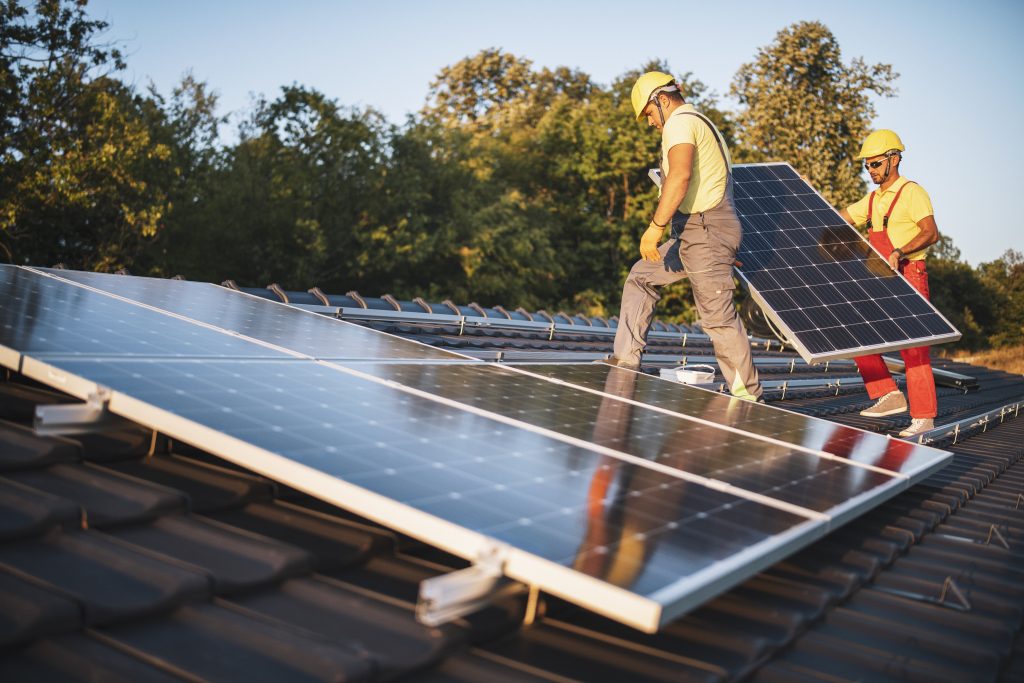
There are many benefits to going solar, but for sellers, the positive effect solar energy has on home values is chief among them. A solar-capable home is a surefire way to drum up buyer interest. By taking care of the upfront installation costs, you allow the buyer to focus on the benefits of solar energy, i.e., the long-term energy savings, the reduced utility bills, and the reduction in the property’s carbon footprint. Depending on your location, you may also be eligible for local or federal tax credits, utility rebates, or other incentives that can offset these installation costs. Work closely with your real estate agent to understand how solar energy has affected home prices in your area to get an idea of the project’s ROI potential.

Team of workers maintenance and install in solar power plant on the roof.

4. Water Filtration

Installing a home water filtration system is one of the best ways to cut down on your home’s waste while increasing its value. These filtration systems appeal to buyers for a variety of reasons. Of course, there are an array of health benefits to having filtered water running through the entire house. Buyers can be assured that the water is safe to drink, they will be bathing and showering in clean water, and there is a reduced risk of plumbing issues due to contaminated water. Beyond the personal health benefits, it can also cut down on bottled water costs and the amount of landfill waste produced within the home. Some whole-home water filtration systems also come with smart sensors that track usage, detect leaks, and monitor filter lifespan, adding a layer of convenience and long-term savings for homeowners.

5. Energy-Efficient Windows

Alternatives to traditional windows have become more popular in recent years. Energy-efficient windows are better insulated, which helps to regulate temperatures inside the home and protects against harmful ultraviolet rays. Their ability to help regulate your home’s heating and cooling leads to energy savings and reduced carbon emissions. Energy-saving windows can be highly valuable to potential buyers, especially if you live in a climate with extreme temperatures.

In addition to temperature regulation, many buyers also appreciate how modern energy-efficient windows help with soundproofing—a big plus in urban or suburban neighborhoods.

Bonus Upgrades to Consider

If you’re looking to go a step further, here are a few more eco-friendly upgrades that may increase your home’s value and appeal:

  • Smart thermostats automatically adjust heating and cooling based on your schedule, saving energy and offering buyers convenience.
  • Upgrading to high-efficiency insulation in walls, attics, or crawl spaces can significantly reduce energy costs.
  • With electronic vehicles becoming more common, having a dedicated outlet or charging setup at home is a huge plus for future-minded buyers.

Planning Ahead: A 12-Month Guide to Buying Your First Home

Thinking about buying a home can be daunting, especially if it’s your first time. What should be an exciting milestone can feel overwhelming without a clearly defined roadmap, and diving in headfirst without a solid plan can lead to unnecessary stress, financial surprises, and missed opportunities. However, by establishing a timeline and breaking the process down into manageable steps, you can move forward with confidence and clarity.

Here is your month-by-month guide to preparing for a successful home purchase in the following year.

12 – 10 Months Out

Know Your Why

Understand your motivation for buying. Are you relocating, growing your household, or ready to invest in your future? Clearly defining your “why” will help shape your search criteria and influence your budget, location, and timeline.

Set Clear Goals

Start to think about what you want in your new home. Create a list of your wants versus must-haves, including location, budget, size, and style of home. These goals will act as a compass throughout your search. Be sure to include your ideal timeline and what you hope to get out of the overall experience.

Find an Agent That Prioritizes Your Goals and Timeline

A trusted real estate agent is more than just a facilitator; they’re a guide, negotiator, and advocate. Look for someone who understands your timeline and long-term vision and is familiar with the local market. Ask them to provide a first-time buyer’s guide or checklist to help you get started. Building this relationship early allows your agent to understand your needs and preferences in advance, setting the stage for a smoother process when you’re ready to make your move.

9 – 7 Months Out

Assess Your Finances

Take a close look at your income, debt, and spending habits. Use this time to create a monthly budget that includes future mortgage payments, utilities, insurance, taxes, and home maintenance. Many experts recommend spending no more than 28% of your gross monthly income on housing costs.

Boost Your Credit

Your credit score has a significant impact on your buying power, including your mortgage rate and loan approval. Take the next few months to pay down high-interest debt, stay current on all payments, and avoid opening new credit accounts. Check your credit report for errors and work on improving your score if needed.

Start Saving

You’ll want to have enough set aside not only for a down payment, which is typically 3% to 20% of the purchase price, but also for closing costs, moving expenses, and initial home repairs or furnishings. During this time, try to avoid nonessential major purchases and think about setting up a dedicated home savings account to stay consistent.

6 – 4 Months Out

Talk to a Financial Advisor

A financial advisor can help you align your financial goals with your homebuying plans. They can offer advice on what you can realistically afford and help identify areas to strengthen your financial readiness. You can also use tools like an online mortgage calculator to get a clearer idea of what your future monthly payments might look like.

Research Homebuyer’s Courses & Guides

Take advantage of first-time homebuyer resources, guides, and online courses. The more you know earlier on, the more confident you’ll feel.

3 – 2 Months Out

Familiarize Yourself with the Market

Start browsing homes and monitoring prices in the neighborhoods you’re interested in. Learn whether your local market is currently favoring buyers or sellers and what that could mean for your strategy.

Meet with a Lender and Get Pre-Approved

Meeting with a lender and getting pre-approved can help give you a clear picture of how much you can borrow and what price range to shop within. It also shows sellers that you’re a serious buyer when the time comes to make an offer. Your realtor can recommend trusted lenders to work with and assist you through this process.

Start Your Home Search

Now that you have your list of wants and needs and know your price range, you’re ready to start searching for your dream home. Use online property research tools to filter by location, features, and price to see what’s available in the locations you like. Narrow down your top homes and start scheduling showings and comparing listings.

1 Month Out

Make an Offer

Once you find “the one,” your agent will help you craft a competitive offer, negotiate terms, and guide you through contingencies.

Get a Home Inspection
If your offer is accepted, a licensed inspector will identify any issues with the property before you finalize your purchase. Depending on what comes up, this can give you leverage to negotiate repairs or price adjustments.

The Time Has Come

Closing On Your New Home
You’ve made it! During closing, you’ll sign paperwork, pay final costs, and receive the keys to your new home. Your agent and lender will walk you through the final steps to ensure everything goes smoothly.

Real Estate | Ways to buy a house in a high-demand area | Seattle Times Newspaper.
Ways to buy a house in a high-demand area

Easing up on your homebuying requirements helps you to buy sooner rather than later.

By Dian Hymer Inman News

DAVID MILLER / THE SEATTLE TIMES

You’d think with so many homes for sale, there would be no problem finding one to buy. However, plenty of buyers who would like to buy now to take advantage of low interest rates and prices can’t find the right home.

One problem is that the most desirable areas don’t have an oversupply of good homes for sale. Sellers who don’t have a good reason to sell now aren’t, so the supply of good listings is low.

Many listings that are available in these coveted areas either need a lot of work or are overpriced for the market.

Fixer-uppers aren’t popular. Most buyers are already concerned about the market, their jobs and the state of the economy. They shy away from homes that need a lot of work because it raises more questions and uncertainty. How much will it cost? Could it cost more than expected? How long will it take to complete the job?

Buyers who have the vision to imagine a home in its fixed-up condition can keep costs down if they live in the home while the work is being done. Expect it to be a stressful experience and plan on the work taking longer than anticipated. Uncontrollable factors, like rain, can hold a project up due to no fault of the contractor.

Most contractors like to work on a time and materials basis, which leaves the ultimate cost unknown. A fixed-price contract may cost more, but if unanticipated work needs to be done, it won’t cost you more. It’s like paying for insurance.

A listing that has been on the market for some time is likely to be overpriced. Try making a low offer. You might be able to negotiate a mutually acceptable price. Before making an offer, ask your agent to find out if the sellers are planning to reduce the price. If so, make your offer quickly. When listings are lowered to the market price, more than one offer can appear. Have your agent search the multiple listing service to see if there are any listings that might suit your needs that didn’t sell and were withdrawn from the market. If the owners still want to sell and are willing to be flexible on price (the listing probably didn’t sell because it was overpriced), make an offer and see if you can reach an agreement.

First, ask to see disclosures and reports to find out if there’s any reason, other than price, why you wouldn’t want to buy the property.

Another approach is to broaden your search. If you’ve been focusing on only one area, you might consider several other neighborhoods that could work for you. This opens you up to more new inventory.

One couple was set on buying in Piedmont, Calif., for the location and schools. There was so much demand in their price range and so few listings they were priced out of that niche market.

They bought a home in neighboring Contra Costa County where they got much more for their money and good schools, although they had to sacrifice on location.

Easing up on your homebuying requirements helps you to buy sooner rather than later. For instance, if you’d like a view but can drop that requirement, you’ll have a much easier time finding a home to buy.

All homebuyers need to make compromises. But don’t buy a home that won’t serve your housing needs. In this market, it makes sense only to buy for the long term.

It’s better to rent until the right place comes along than it is to buy a home that you’ll need to sell again soon.
Top comments Hide / Show comments
quotes Regarding fixer-uppers, the author makes two mistakes in a row. She says most… (October 17, 2011, by marshafielding)

What a Million Bucks Buys: West Coast Edition